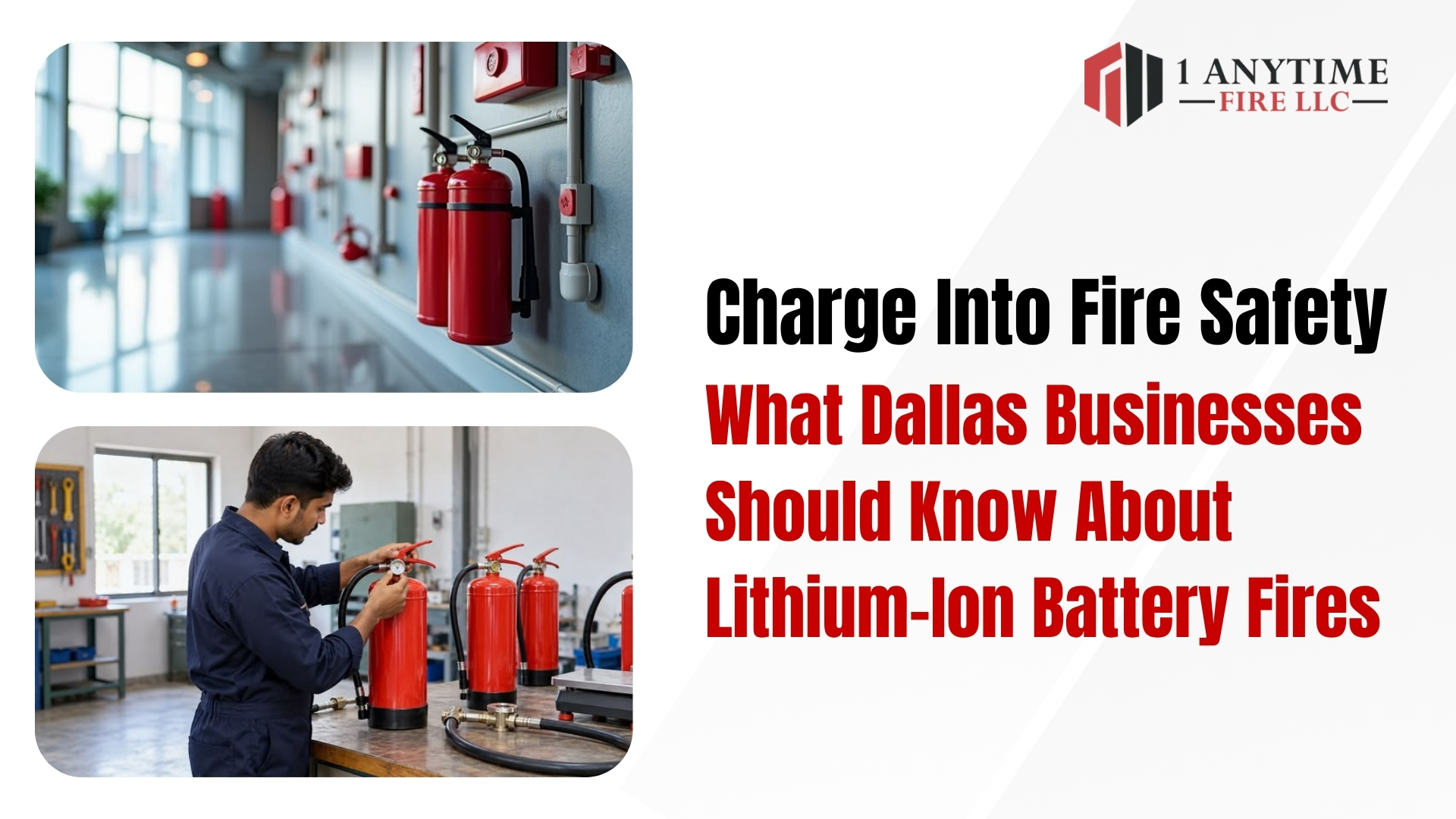
Charge Into Fire Safety: What Dallas Businesses Should Know About Lithium-Ion Battery Fires
Lithium-ion batteries power many of the devices businesses use every day. Phones, laptops, tablets, cordless tools, electric vehicles, scooters, warehouse equipment, backup batteries, and other rechargeable products all depend on this technology.
But are your employees charging these devices safely?
A damaged battery, overloaded outlet, incompatible charger, or poorly managed charging area can create serious fire risks. Once a lithium-ion battery enters thermal runaway, it can heat rapidly, release flammable gases, ignite, and sometimes reignite after the initial fire appears to be controlled.
This October, Fire Prevention Week runs from October 4–10, 2026, with the theme “Charge into Fire Safety: Safe Charging Is a Superpower.” For Dallas businesses, it is an ideal time to review charging practices, emergency procedures, fire protection equipment, and employee awareness.
Why Lithium-Ion Battery Safety Matters
Lithium-ion batteries are efficient and convenient, but they require proper handling. Problems may occur when batteries are damaged, overheated, overcharged, modified, or charged with the wrong equipment.
Common warning signs may include:
- Swelling or bulging
- Cracked or punctured battery cases
- Unusual heat
- Leaking or strange odors
- Smoke or hissing sounds
- A charger or battery that becomes excessively hot
- Reduced performance after damage
What would happen if an employee noticed a swollen battery but did not know who to report it to? Would your team recognize the warning signs before the problem became an emergency?
A clear reporting process can help employees respond quickly instead of ignoring a potentially dangerous condition.
Common Charging Risks in Dallas Workplaces
Lithium-ion battery risks can appear in many commercial environments, including offices, warehouses, retail locations, workshops, apartment communities, and construction sites.
Potential hazards include:
- Charging batteries near combustible materials
- Using damaged or counterfeit chargers
- Charging devices overnight without supervision
- Blocking exits or walkways with charging equipment
- Storing batteries in high-temperature areas
- Using extension cords or overloaded power strips
- Leaving damaged batteries in general trash
- Charging tools near dust, chemicals, or flammable liquids
Construction sites may face additional risks because workers often use cordless drills, saws, lighting equipment, radios, and other battery-powered tools. Temporary power arrangements, crowded storage areas, and changing site conditions can make fire prevention more difficult.
For contractors, fire safety should be reviewed as the project changes. A charging area that was acceptable during one phase may become unsafe when materials, equipment, or workers move into the space.
Create a Safer Battery Charging Area
Businesses should consider establishing designated charging areas rather than allowing employees to charge batteries wherever convenient.
A suitable charging area should be:
- Away from exits and stairways
- Free from unnecessary combustible materials
- Well ventilated
- Protected from water and physical damage
- Organized to prevent tangled cords
- Accessible for inspection
- Clearly marked for employees
Keep chargers and batteries on stable, non-combustible surfaces whenever possible. Follow the manufacturer’s instructions for charging, storage, temperature, and use.
Do not charge a battery that is visibly damaged, swollen, leaking, or unusually hot. Employees should know how to isolate the item and report it according to the company’s emergency procedure.
Inspect Fire Safety Equipment Before an Emergency
Safe charging practices are important, but they are only one part of a complete fire protection plan.
Ask yourself:
- Are fire extinguishers easy to find and access?
- Have they received their required inspections?
- Are sprinkler valves open and properly identified?
- Has the fire sprinkler system been inspected?
- Has the fire pump been tested?
- Are emergency exits clear?
- Do employees know where to go during an evacuation?
- Are fire protection records current?
Professional fire extinguisher inspection services can help identify missing, damaged, discharged, or improperly placed equipment. Fire sprinkler inspection services and fire pump testing services can help verify that essential systems are ready to perform when needed.
Businesses in Dallas may also benefit from a broader fire risk assessment that reviews charging areas, storage, electrical equipment, emergency access, and other workplace conditions.
Fire Safety for Construction Sites
Construction sites often use large numbers of rechargeable tools and equipment. At the same time, they may contain temporary wiring, combustible materials, fuel, packaging, insulation, and unfinished fire protection systems.
Construction site fire safety should include:
- Designated tool-battery charging areas
- Daily housekeeping inspections
- Safe storage of combustible materials
- Clear access to fire extinguishers
- Hot-work controls
- Emergency communication procedures
- Regular review of changing site conditions
Fire extinguishers on construction sites should be appropriate for the potential hazards and positioned where workers can reach them quickly. Site managers should also make sure subcontractors understand the charging and reporting rules.
If a battery begins smoking or catches fire, employees should follow the site emergency plan, alert others, evacuate when required, and call emergency services. They should not take unnecessary risks to retrieve equipment or handle a damaged battery.
What Should You Do With a Damaged Battery?
Never place a damaged, swollen, smoking, or overheated lithium-ion battery in regular trash or recycling. Do not puncture, crush, dismantle, or transport a dangerous battery unless trained personnel and proper procedures are available.
Move people away from the area and follow your company’s emergency plan. Contact emergency services when there is smoke, fire, intense heat, or a risk to people or property.
For disposal, consult the battery manufacturer, local waste authority, or a qualified hazardous-materials program. Requirements may vary based on the battery type, condition, and local regulations.
Protect Your Business Beyond Fire Prevention Week
Fire Prevention Week is a useful reminder, but safe charging should remain part of your year-round fire protection program.
Review your policies with employees, inspect charging areas, schedule overdue fire system testing, and document corrective actions. If you operate a business in Dallas, Plano, Frisco, Richardson, Garland, or another DFW community, a qualified fire protection provider can help you review your equipment and testing needs.
1 AnyTime Fire LLC provides fire protection services including fire pump testing, backflow and fire system testing, fire sprinkler inspection, fire extinguisher services, and fire protection support.
Final Thoughts
Lithium-ion batteries are valuable tools, but convenience should never replace caution.
Ask your team:
Are we charging batteries in the safest location?
Would every employee know what to do if a battery became hot, swollen, or damaged?
Are our fire extinguishers, sprinklers, pumps, and emergency procedures ready today?
The answers can help you identify gaps before an incident occurs. This October, charge into fire safety by making smart decisions every time you plug in.