Fire safety isn’t something most business owners think about until they have to.
Maybe it’s an upcoming inspection.
Maybe it’s an insurance requirement.
Or maybe it’s just the realization that a single fire incident could shut everything down.
If you manage an office, warehouse, or retail space, here’s an important question:
Are you confident your fire protection systems will actually work when you need them most?
Because meeting fire safety requirements isn’t just about compliance, it’s about protecting people, operations, and everything you’ve built.
Let’s break down what you really need to know.
Why Fire Safety Requirements Matter More Than Ever
Every commercial space has its own risks.
- Offices deal with electrical systems, equipment, and occupancy
- Warehouses store large volumes of goods, often highly combustible
- Retail spaces face high foot traffic and complex layouts
Now think about this:
What would happen if a fire broke out today?
Would your system respond instantly, or fail when it matters most?
Fire safety requirements exist to eliminate that uncertainty.
They’re designed to ensure your systems are not just installed, but fully functional, regularly tested, and ready at all times.
1. Fire Alarm Systems: Your First Warning Line
Fire alarm systems are critical for early detection.
They alert occupants, trigger emergency responses, and help minimize damage. But here’s the key question:
When was the last time your alarm system was tested?
Requirements typically include:
- Routine inspections and testing
- Functional smoke and heat detectors
- Audible and visible alarms
- Backup power supply
Without proper testing, even a small fault can delay response time, and that delay can be costly.
2. Fire Sprinkler Systems: Immediate Response Matters
Sprinkler systems are designed to activate automatically when a fire is detected.
But many business owners assume:
“If it’s installed, it’s working.”
That’s not always true.
Sprinklers require:
- Regular inspections
- Pressure checks
- Obstruction and corrosion monitoring
- Valve and pipe maintenance
A blocked or low-pressure system may not perform effectively during an emergency.
So the real question becomes:
Are your sprinklers ready, or just installed?
3. Fire Pump Testing: The Backbone of Your System
For buildings that rely on water-based systems, fire pumps are essential.
They ensure water reaches every part of your building at the right pressure.
But here’s something many overlook:
Fire pumps can degrade over time without visible signs.
That’s why NFPA 25 requires annual fire pump testing , including churn and flow testing to verify performance.
Without testing, you’re relying on a system that hasn’t been proven to work.
4. Backflow Prevention: Protecting the Water Supply
Backflow systems prevent contaminated water from entering your clean water supply.
It’s a requirement that often goes unnoticed, until there’s a compliance issue.
Regular backflow testing ensures:
- Safe water supply
- Proper system pressure
- Compliance with local regulations
Skipping this step can lead to fines, failed inspections, and safety risks.
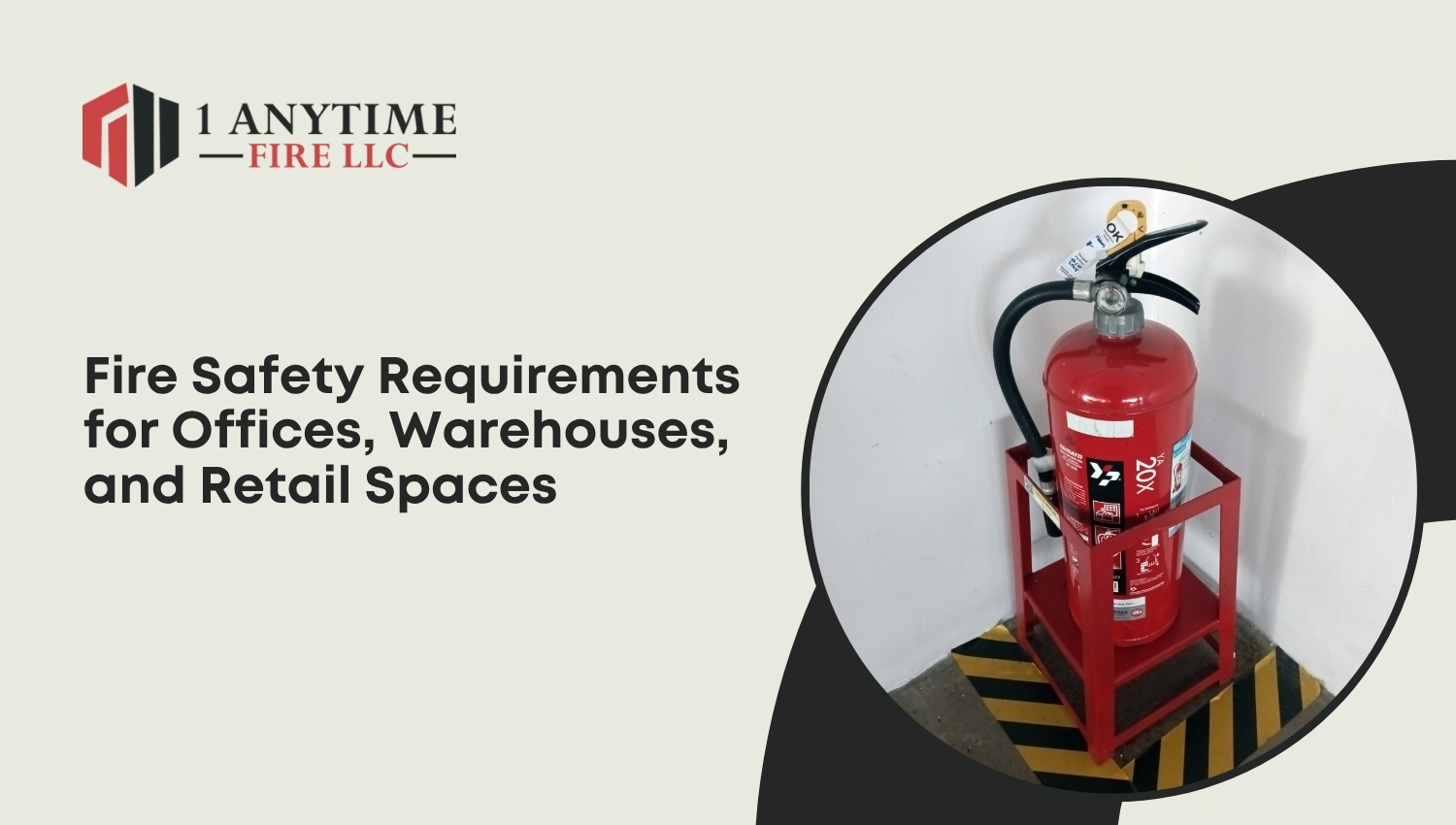
5. Fire Extinguishers: Small Tools, Big Impact
Fire extinguishers are your first line of defense.
But let’s ask a simple question:
If someone needed to use one today, would it work?
Requirements include:
- Correct type (ABC, Class K, etc.)
- Accessible placement
- Monthly visual checks
- Annual professional inspection
A missing, expired, or discharged extinguisher can turn a small fire into a major incident.
6. Emergency Exits & Lighting: Safe Evacuation Matters
Fire safety isn’t just about stopping a fire; it’s about helping people get out safely.
That means:
- Clearly marked exit routes
- Functioning emergency lighting
- Unblocked pathways
- Updated evacuation plans
In high-traffic environments like retail spaces, this becomes even more critical.
7. Documentation & Compliance: The Part Most Businesses Miss
Here’s where many businesses struggle.
They have the systems… but not the documentation.
And during an inspection, that’s a problem.
You need:
- Inspection reports
- Testing records
- Maintenance logs
- Compliance documentation
Without these, even a working system can fail an inspection.
Common Mistakes Business Owners Make
Let’s be honest, fire safety often gets delayed.
Some common issues include:
- Skipping annual inspections
- Ignoring minor system issues
- Missing documentation
- Assuming systems are working without testing
These small gaps can lead to big consequences.
Why Professional Fire Protection Services Matter
Fire safety isn’t something you should manage alone.
At 1 ANYTIME FIRE LLC, we help businesses across Plano, Frisco, Richardson, and surrounding areas:
- Perform certified fire pump testing
- Inspect sprinkler and backflow systems
- Ensure NFPA compliance
- Provide detailed reports within 24 hours
- Keep you inspection-ready year-round
With over 15 years of experience, we make fire safety simple, reliable, and stress-free.
Safety Starts Here
Fire safety requirements aren’t just regulations; they’re protection.
Protection for your employees.
Protection for your customers.
Protection for your business.
So here’s the final question:
Are you truly prepared, or just assuming you are?
If you’re unsure, it’s time to take action.
Schedule your fire safety inspection with 1 ANYTIME FIRE LLC today and make sure your systems are ready when it matters most.
Stay compliant. Stay protected. Stay prepared.